The Veracity of the Grain: Cinematic Realism as a Counter-Signal to the Epistemological Crisis
We are living through a quiet, seismic shift in how we perceive reality. As we enter the mid-2020s, the boundary between the authentic and the synthetic has not just blurred; it has dissolved. This is the Epistemological Crisis—a moment in human history where the ability to distinguish between a generated hallucination and a captured moment is no longer a given. For the visionary brand, the founder, and the creator, this creates a vacuum of trust. When anything can be simulated, nothing feels true.
At 1976 Studios, we believe the antidote to this crisis isn’t more technology, nor is it a rejection of it. The answer lies in cinematic storytelling that prioritizes veracity over polish. We are moving beyond the era of 'content' and into the era of the 'artifact'—media that carries the weight of presence, the texture of reality, and the unmistakable signature of the human soul.
The Epistemological Fog: Why Trust is the New Currency
In 2025 and 2026, the market is no longer just saturated; it is suspicious. Audiences are developing a sixth sense for the 'uncanny valley' of marketing—the hyper-smoothed, AI-polished visuals that look perfect but feel empty. This suspicion isn't just a trend; it's a survival mechanism in a world losing its grip on truth. When the cost of production drops to near zero through generative tools, the value of the 'captured' increases exponentially.
The strategic challenge for purpose-driven brands is no longer about visibility; it is about veracity. You do not need a louder megaphone; you need a more honest lens. Cinematic realism serves as a counter-signal to the digital noise. By intentionally leaning into the raw, the handheld, and the naturally lit, we signal to the audience that what they are seeing is grounded in the physical world. It is a visual promise that your brand exists in the same gravity as your customers.
The Architecture of Presence: Defining Cinematic Realism
Cinematic realism is often misunderstood as 'low quality.' In reality, it requires a higher level of creative direction and technical mastery than traditional corporate production. It is the art of capturing presence rather than perfection. Through deliberate cinematography, we move away from the static, sterilized environments of the past decade and toward a visual narrative that breathes.
- Naturalism over Artifice: We trade studio strobes for the shifting temperaments of natural light. Light that carries the dust of the room and the shadows of the afternoon signals that a moment actually happened.
- The Kinetic Frame: Handheld camera work, when executed with intention, mimics the human gaze. It suggests a witness. It tells the viewer: I was there, and I saw this.
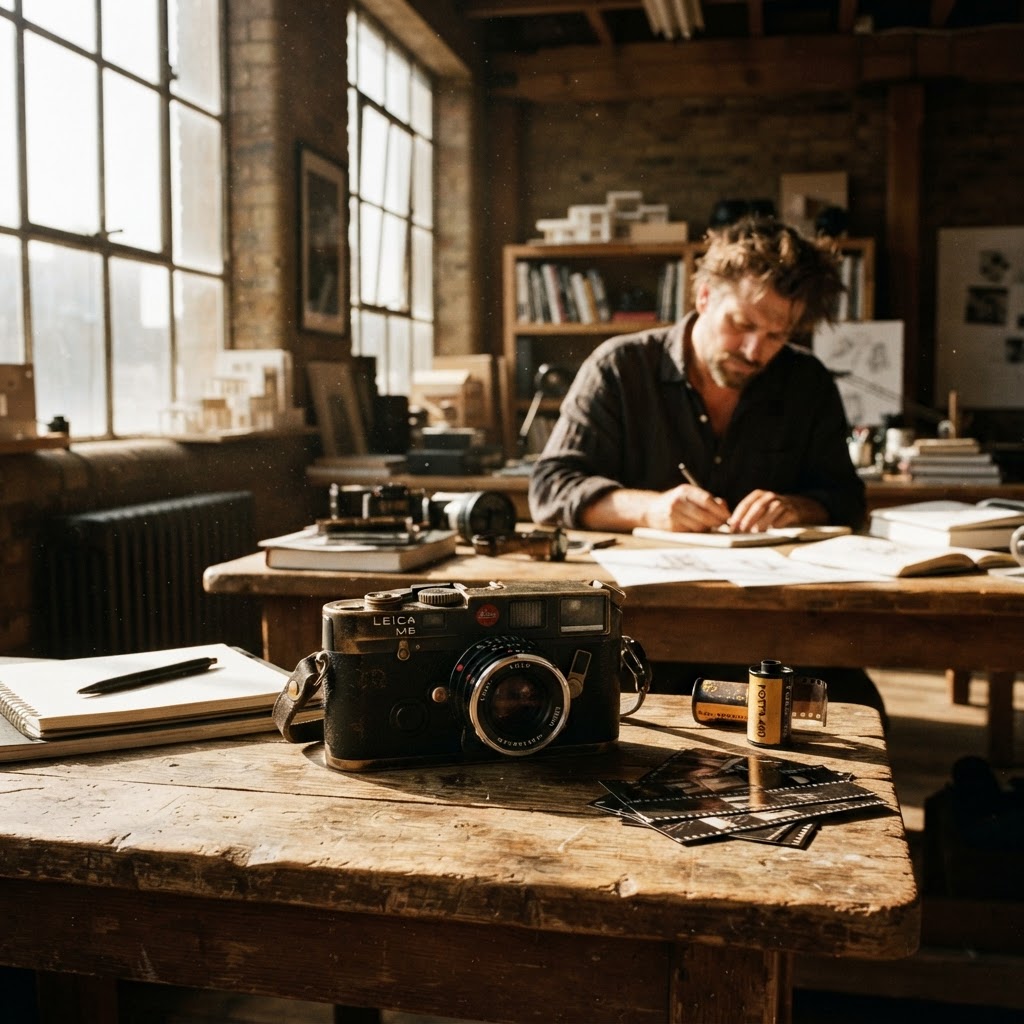
- Tactile Visual Signatures: In an era of liquid-smooth digital renders, we embrace the 'grain.' Muted tones, organic textures, and the subtle imperfections of glass and film stock create a tactile experience. These aren't just aesthetic choices; they are anchors of credibility.
Human-AI Synthesis: Narrative Intelligence as the North Star
At 1976 Studios, we are not Luddites. We embrace the revolution of AI-enhanced production, using it to accelerate previsualization and streamline complex post-production workflows. However, we recognize a fundamental truth: AI can generate images, but it cannot generate meaning. It lacks the 'narrative intelligence' required to understand why a specific glance, a pause, or a shaft of light resonates with the human spirit.
The synthesis of high-tech tools and human soul is where the most powerful film production now lives. We use technology to handle the heavy lifting of logistics, freeing our creative direction to focus on the emotional judgment that only a human can provide. The goal is a visual narrative that feels both technologically advanced and deeply primordial. We use the machine to serve the message, ensuring the 'grain' of the story remains human-led.
The Acoustic Shadow: The Power of Ambient Truth
Veracity isn't just seen; it is heard. One of the most overlooked elements of cinematic realism is the use of ambient, diegetic sound. While traditional marketing opts for over-produced, stock-music-driven soundtracks, visionary media leans into the 'acoustic shadow.' The sound of a room, the rustle of wind through a conservation site, or the natural timbre of a founder’s voice—these are the frequencies of trust.
By integrating these organic layers, we create a multisensory experience that bypasses the analytical mind and speaks directly to the gut. This is the new algorithm: emotion. In niche markets, especially for startups and nonprofits, this documentary-style honesty creates a bond that no scripted campaign can replicate. It transforms the viewer from a passive consumer into an active witness.
Building Media That Moves People
The brands that will define the next decade are not those with the largest budgets, but those with the most courage to be real. 1976 Studios exists to be the architect of this reality. We build media that doesn't just occupy space on a screen, but takes root in the mind of the viewer. We believe that in a world of synthetic noise, the most revolutionary thing you can do is show the truth.
Whether you are a musician seeking to capture the soul of a performance, a founder launching a movement, or a conservationist documenting the heartbeat of the earth, your media must be as real as your mission. It’s time to move past the polish and rediscover the veracity of the grain.
Are you ready to anchor your vision in truth?