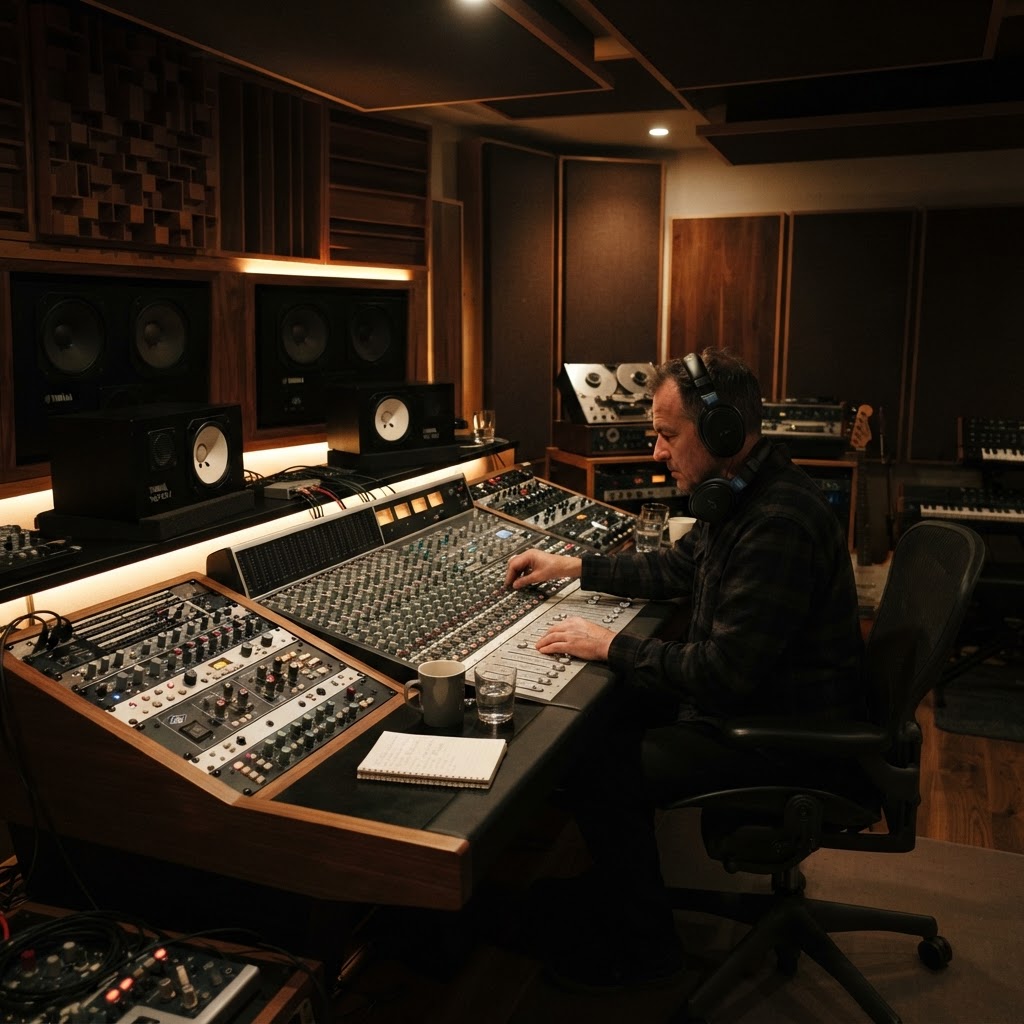
Featured image: an illustrative studio scene, not a photograph of 1976 Studios premises or staff.
Before a composer or sound editor starts work on your film, agree on what the audience should hear at its most important moments. A useful sound brief gives the team decisions to work from: which words must be understood, which actions need emphasis, and where music should enter or stop.
This is a suggested planning exercise for founders, filmmakers and nonprofit teams commissioning a short film. It is not a description of a completed 1976 Studios client project.
Choose three moments that carry the story
Watch the current cut and select its opening, its main turning point and its ending. For each moment, write one sentence about what the viewer needs to understand. “The founder has made a difficult decision” gives a collaborator more direction than “make this feel cinematic.” If the picture is still changing, label the cut so everyone reviews the same version.
Give each moment a sound priority
Dialogue, effects, ambience and music have different jobs. The Krotos sound-design guide describes a spotting pass as a way to identify audio priorities before sourcing or creating sounds. For your brief, name the element that should lead each selected moment and note anything that competes with it.
For example, a hypothetical workshop film might open with the sound of a tool, bring a spoken explanation forward at the turning point, and end with a short musical phrase. This is a creative option to discuss, not a formula for every film.
Turn preferences into reviewable notes
Ask collaborators to respond to specific timestamps. Replace “the music is wrong” with a note such as “at 00:24, try delaying the music until the speaker finishes this sentence.” Separate an essential correction from an alternative you want to audition. Agree who makes the final creative decision before collecting feedback from a larger group.
A compact brief can contain the cut version, three timestamps, the intended meaning of each moment, a sound priority and one open question. Keep a separate list of approved music and sound assets so the team can confirm that the chosen material is suitable for the intended release.
Bring the brief to the production conversation
1976 Studios lists composition, mixing, mastering, cinematic scoring, voiceover production and sonic branding among its audio services. Share your current cut, audience, release plans and sound brief when discussing a project. Those details give the conversation a concrete starting point without prescribing the finished score.