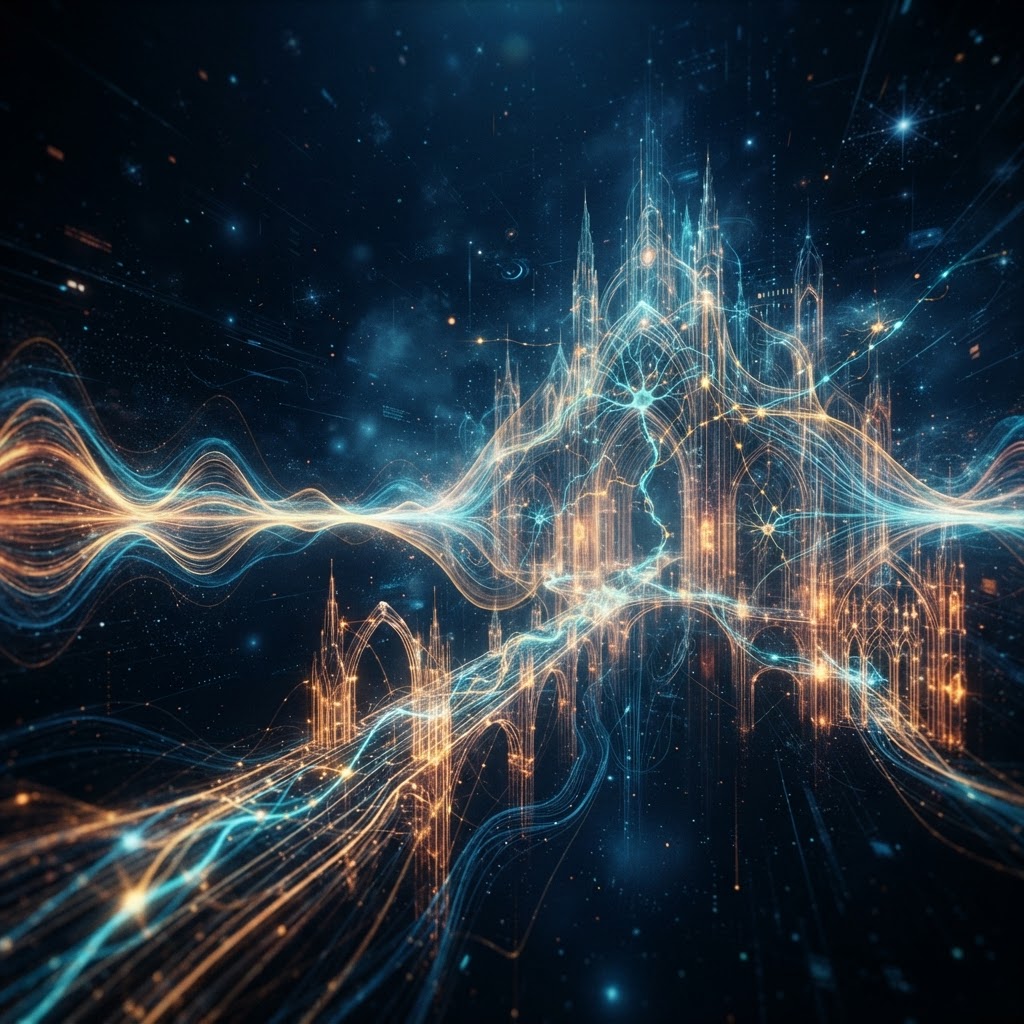
The Sonic Nervous System: Engineering Auditory Resonance into the Architecture of Living Media
We are biological entities before we are digital users. Long before our eyes decipher a pixel or our minds categorize a call to action, our bodies have already reacted. Within the silent vacuum of the modern digital experience, a critical component of human connection has been forgotten: the ear. At 1976 Studios, we do not just build websites; we architect living media. We understand that the most direct path to the human heart isn't through a screen, but through the sonic nervous system.
Agencies optimize campaigns. Studios create culture. For the founders, creators, nonprofits, and visionaries who understand that the future is felt as much as it is seen, the integration of sound is no longer a luxury—it is the very infrastructure of emotional resonance.
Digital Instinct: Why the Ear Trumps the Eye
In the evolutionary race for survival, sound won. Human biology processes auditory cues approximately ten times faster than visual ones. While the eye lingers on a hero image or navigates a menu, the ear has already alerted the nervous system to the environment's safety, urgency, or depth. This is what we call 'Digital Instinct.'
When a user lands on a digital sanctuary, the sonic nervous system triggers emotional resonance before the first scroll is complete. Most web design treats audio as an afterthought—a 'mute' button waiting to happen. At 1976 Studios, we treat audio as the primary signal. By engineering auditory resonance into the core architecture of the digital experience, we reduce the cognitive distance between a brand’s purpose and a user’s perception. We move people by speaking to their biology.
From Logos to Systems: The Adaptive Narrative
The era of the static 'sonic logo' or the isolated jingle is over. In the landscape of 2026, visionaries require 'Sonic Systems'—musical frameworks that adapt in real-time to user interactions. Imagine a platform where the background ambience shifts in frequency as a user moves from exploration to action, or where the feedback of a successful interaction isn't just a generic 'ping,' but a harmonic resolution that rewards the user’s journey.
This is the difference between content and immersive experience. A sonic system creates a seamless narrative thread through an app or site, turning a series of clicks into a cinematic movement. For purpose-driven brands and musicians, this adaptive audio ensures that the digital experience is never static; it is a living, breathing extension of their creative vision.
The Fidelity Gap: The Technical Soul of Sound
There is a hidden barrier to trust in the digital world: The Fidelity Gap. Subconscious brand trust is inextricably tied to audio quality. When a premium brand presents high-end visuals alongside low-bitrate, compressed, or distorted audio, a psychological dissonance occurs. This 'Total Harmonic Distortion' (THD) in digital playback causes subtle user irritation and disengagement, often without the user even realizing why they feel 'off.'
1976 Studios bridges this gap by merging high-end music production with sophisticated software engineering. We treat the digital interface as a high-fidelity signal chain. By optimizing audio assets through custom-engineered playback engines, we ensure that the warmth of a cello or the crispness of a field recording remains intact, even on mobile devices. We eliminate the friction of low-fidelity experiences, replacing it with the smooth, high-bandwidth resonance that premium visionaries demand.
Cognitive Load Reduction for the Visionary
Founders and conservation organizations often manage platforms with high information density. Whether it is a complex data dashboard for a nonprofit or a multi-layered portfolio for a creator, the 'visual noise' can be overwhelming. This is where sound design acts as an organizational tool.
Well-engineered sonic feedback reduces the mental effort required to navigate complex digital environments. By using distinct auditory textures to categorize different types of information, we offload the work from the visual cortex to the auditory system. This reduction in cognitive load allows users to stay engaged longer, feel less fatigue, and absorb the core message with greater clarity. In the architecture of living media, sound is the unseen guide that points the way.
Sonic Sanctuaries: Transporting the Soul
For conservationists and musicians, the goal is often transportive. How do you make a donor in a high-rise office feel the humidity of a rainforest? How do you make a listener feel the acoustic space of a recording studio? Sound-first design is the answer.
By utilizing biophilic soundscapes—recordings of the natural world integrated into the UX design—we create 'Sonic Sanctuaries.' These environments foster a deep cultural impact by bypassing the analytical mind and speaking directly to the soul. Visuals show you the world; sound makes you part of it. At 1976 Studios, we craft these immersive experiences to ensure that your mission isn't just understood—it is felt at a cellular level.
The Discipline of Silence: Performance and Intentionality
With great power comes the risk of sensory overload. The most common failure in interactive media is auditory fatigue—blasting the user with sound until they reach for the 'off' switch. Our approach centers on 'silent growth' and intentionality. We prioritize context-aware sound design, ensuring that audio only surfaces when it adds value and meaning.
Furthermore, we tackle the challenge of technical latency. High-fidelity audio can be heavy, but our engineering team ensures that the immersive experience never sacrifices performance. We use advanced compression algorithms and asynchronous loading to keep page speeds lightning-fast while maintaining sonic integrity. The result is a digital experience that feels effortless, responsive, and profoundly human.
Beyond the Screen: Building Culture
Technology is changing everything, but the fundamental human need for meaning remains constant. We are in the business of creating meaning. By engineering the sonic nervous system, 1976 Studios empowers visionaries to build more than just a digital presence; we help them build a digital legacy.
We invite the founders who are tired of cookie-cutter agencies and the creators who want to break the fourth wall of the internet. Let us architect an experience that resonates. Let us build media that moves people.