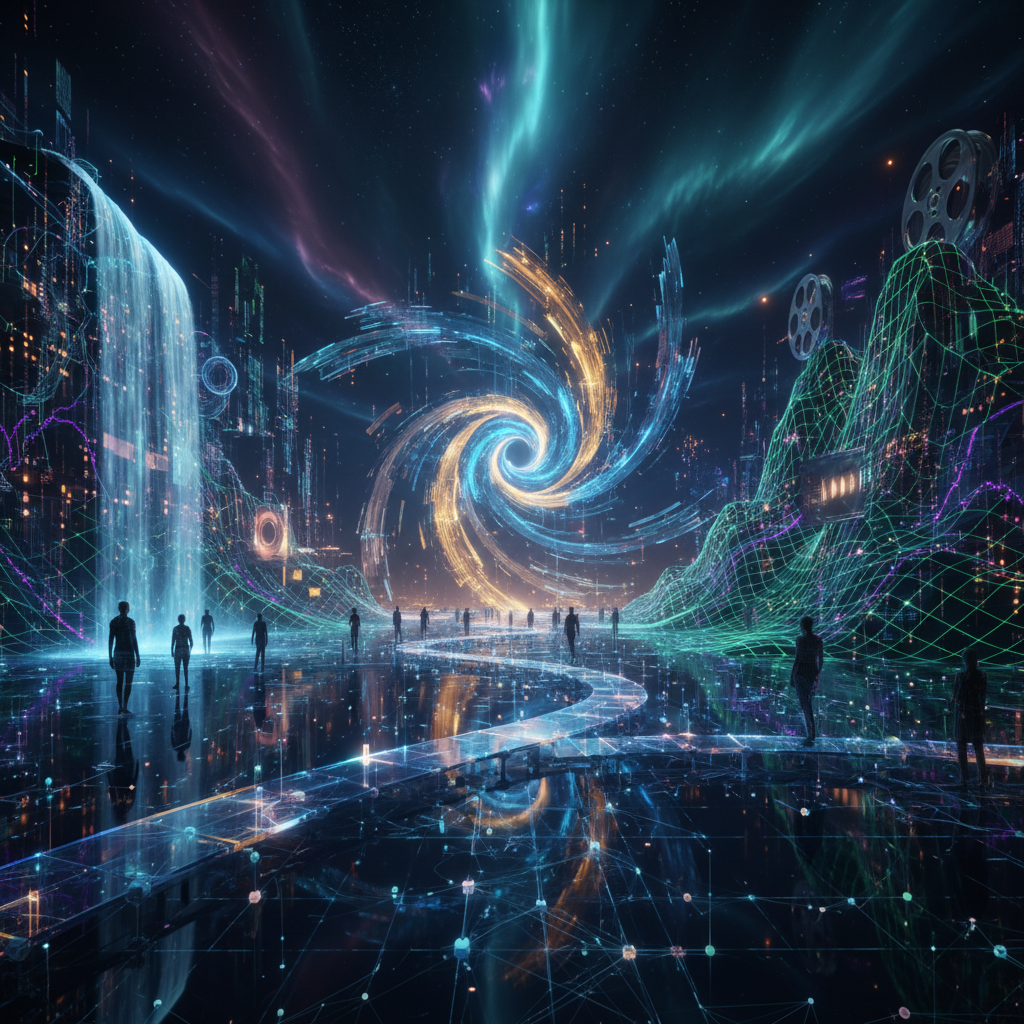
The Rise of Living Media: Designing Immersive, Emotion-Driven Digital Worlds for the 2026 Visionary Landscape
We build media. That moves people. At 1976 Studios, we recognize that the world doesn't need more content; it needs more meaning. As we approach 2026, the digital landscape is undergoing a seismic shift. The era of static landing pages and transactional marketing is fading, replaced by the emergence of Living Media. Agencies optimize campaigns, but Studios create culture. For the founders, creators, and visionaries of today, the challenge is no longer about reaching an audience—it is about moving them.
The Transition from User-Centered to Human-Aware Design
For decades, UX design has focused on the user as a set of interactions—clicks, scrolls, and conversions. But the 2026 visionary landscape demands more. We are witnessing a transition from user-centered design to Human-Aware Design. This is a digital experience that acknowledges the emotional state of the person on the other side of the screen. In this new era, platforms are becoming intelligent enough to anticipate emotional context, adjusting tone, layout, and even soundscapes in real-time to meet the user’s current state of mind.
When a digital environment can sense stress or excitement and respond by simplifying its interface or elevating its narrative depth, it ceases to be a tool and becomes a companion. This is the heart of 1976 Studios’ philosophy: creating digital spaces that feel, breathe, and connect on a visceral level.
Websites as Living Systems: The Death of the Landing Page
The traditional concept of a landing page is dead. In its place, we see the rise of websites as living systems—dynamic environments that learn from user interactions and continuously evolve. These are not static brochures; they are digital ecosystems. For the conservation organization or the purpose-driven startup, a living system means the narrative impact grows the more a visitor engages with it. Modern platforms now use deep learning to optimize for narrative impact rather than just conversion metrics, ensuring that the story being told is always the one that needs to be heard.
Cinematic Storytelling Pipelines: Film, Music, and Code
At 1976 Studios, we believe that the most powerful digital experiences are those that borrow from the language of cinema. Our unified creative pipelines merge film, music, and high-performance code into a single, cohesive immersive experience. By utilizing tools like GSAP for high-end animation and 3D textures for tactile realism, we create scroll-triggered narratives that demand attention.
Imagine a digital experience where every scroll feels like a camera movement in a masterfully directed film. Where the music swells in response to the user's focus, and where 3D elements provide a sense of digital presence that makes the screen disappear. This is not marketing; this is world-building. For musicians and creators, this level of interactive media provides a stage that is as vast as their imagination.
The Anti-Fragmentation Movement: Why Unified Creative Pipelines Matter
Modern marketing is often broken. Brands hire one agency for web design, another for video production, and a third for brand strategy. The result is a fragmented identity that lacks emotional depth. Visionaries are now moving away from these multi-agency models toward unified creative pipelines. 1976 Studios acts as the single source of truth for your brand’s soul. By keeping the film, the code, and the strategy under one roof, we ensure brand continuity that resonates across every touchpoint. This unity is what allows a brand to transition from being a product to being a cultural icon.
AI as a Creative Catalyst: Experience Orchestration
Technology is changing everything, but it is the human story that remains. At 1976 Studios, we view AI not as a replacement for the designer, but as a catalyst for orchestration. AI allows us to automate the logistical friction of production—the mundane tasks that drain creative energy—so that our team can focus on complex world-building and emotional resonance. It is about removing the 'work' from the 'artwork.' This allows for a higher level of personalization without losing the human touch that makes a brand authentic.
The Digital Sanctuary: Building for Peace and Connection
As the digital world becomes increasingly crowded and noisy, the future belongs to those who build Digital Sanctuaries. These are spaces designed for depth, focus, and emotional safety. However, creating such immersive environments requires a trust-first approach to data. Implementing high-level personalization and human-aware features must be done with transparency and ethics at the forefront. At 1976 Studios, we prioritize ethical UX design, ensuring that while our digital worlds are deeply personal, they are never intrusive. We build for connection, not just consumption.
Conclusion: Moving People into the Future
The year 2026 will belong to those who understand that the screen is not a barrier, but a bridge. Whether you are a nonprofit looking to spark a movement, a startup aiming to disrupt an industry, or a musician seeking to build a universe for your fans, the path forward is through Living Media. 1976 Studios exists to bridge the gap between technology and emotion, crafting cinematic software development that creates a lasting cultural impact.
Are you ready to move people? Don't just build content. Build a legacy.