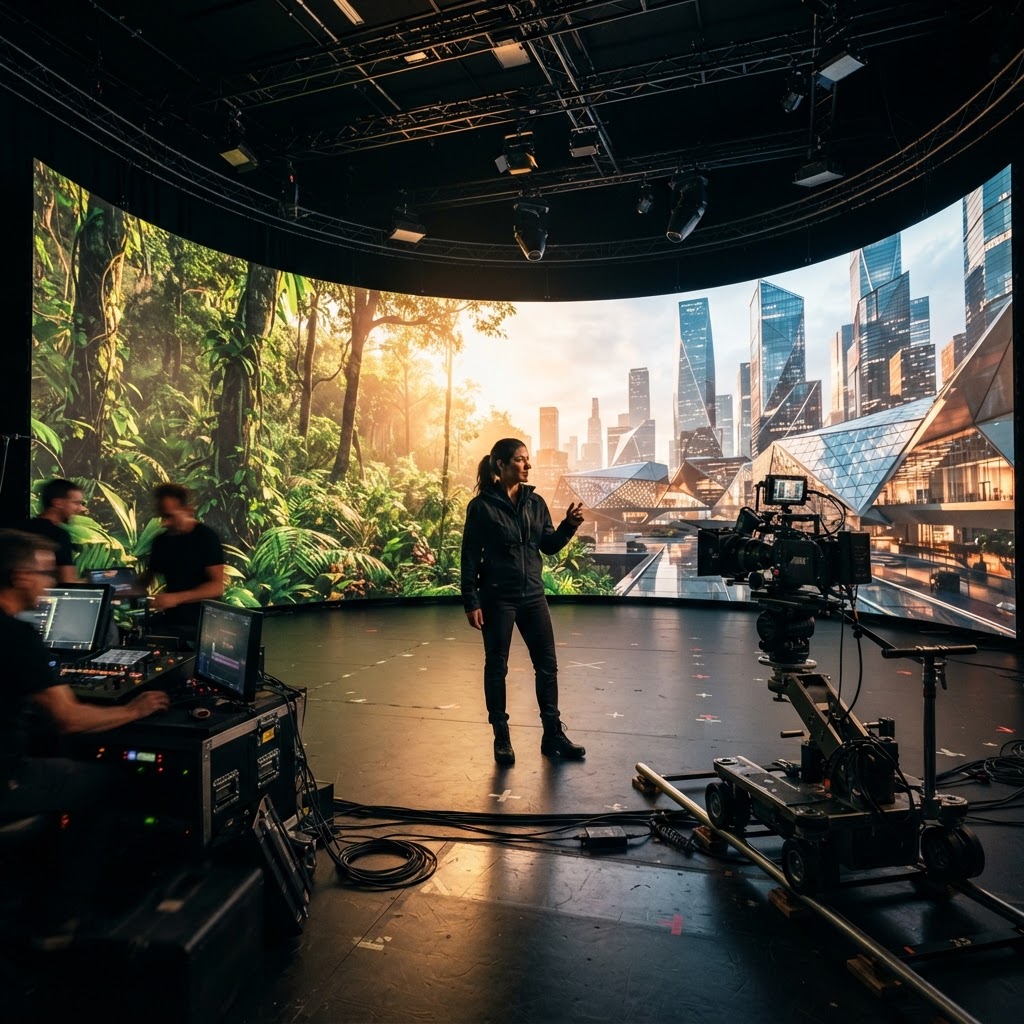
AI-generated concept illustration of a production stage. It does not depict a 1976 Studios facility, client project, completed shoot or software interface.
A shorter interview cut can sound more confident than the person who gave the interview. A generated background can make an ordinary office look like a finished project site. Neither change needs to be dramatic to alter what a viewer understands.
Before adding AI assistance to a production, decide who will review those changes and what that person will compare them with. The useful question is specific: who can say that this version still represents the intended story accurately?
Give the assistant a bounded assignment
Describe the task in terms of a proposed output: organize interview passages, suggest alternate openings, or prepare visual concepts for discussion. Keep the source material and the proposed result distinguishable.
For example, an assistant might identify three passages about why a volunteer joined a project. That assignment does not authorize it to combine separate remarks into a new quotation. Ask for references back to the original recording so an editor can review the context.
NIST's voluntary AI Risk Management Framework treats trustworthiness as something to consider through design, use and evaluation. The practical review steps here are editorial suggestions for a production brief, not a certification or a claim about features in a particular tool.
Match the reviewer to the decision
A creative director can decide whether an opening fits the treatment. Someone familiar with the source interview can check whether an edit preserves its meaning. A project representative can confirm whether a scene describes a planned activity or completed work.
One person may cover several roles on a small production. Write the responsibilities down anyway. A general request to “check everything” makes it harder to see which questions remain unanswered.
Review the change beside its source
Suppose an interviewee says, “We hope to open the space next spring,” and a draft caption says the space is opening next spring. The missing qualification changes the promise. Review the caption against the recording and the current project facts before accepting it.
Apply the same comparison to visuals. If a concept image depicts a completed room, identify it as a concept wherever a viewer could mistake it for footage of the actual space. A convincing appearance is not evidence that the place exists.
Record which version received approval
Give each review copy a clear version name. Record the requested changes, the person responsible and the version that resolves them. Keep exploratory outputs out of the delivery folder until the team has decided how they will be used.
After a material change, send the affected portion through its relevant review again. Approval of an earlier voiceover does not settle the wording of a later rewrite. Approval of a rough cut does not automatically cover a newly generated shot.
Make the handoff understandable
Deliver the chosen export with its version, intended destination and any captions or context the viewer needs. Confirm that the file being handed over is the one the team reviewed. Keep unresolved questions visible until someone answers them.
This process does not require a claim that an AI system understands a brand's ethics or guarantees creative consistency. It requires people who know the material to make explicit decisions about the work.
1976 Studios brings together cinematic production, digital development and AI-assisted creative workflows. Start the production conversation with the source material, intended output and people who need to review it.