A brand story may open with a moving image, a rising score and a carefully timed reveal. Now imagine visiting with the sound off and the motion unavailable. Does the story still make sense?
Designing a quiet version is a creative exercise as well as a practical review. It asks which parts of the experience carry meaning and which provide atmosphere.
Write the story as a sequence of ideas
List what a visitor needs to understand: the situation, the change, the evidence and the invitation. Then identify how each idea appears without relying solely on an animation or sound cue.
For an illustrative conservation campaign, a moving landscape might establish a place. A short written description can establish that context in the quiet version. A dramatic transition should not be the only way the visitor learns that the project is proposed rather than completed.
Give each pause a useful frame
Choose still imagery that communicates the moment rather than capturing an arbitrary point in an animation. Pair it with text that says something new instead of repeating a slogan.
Do not hide the next step until a visitor has watched a sequence. During review, ask whether someone can understand the purpose and find the relevant action without waiting for the presentation to finish.
Review the two experiences together
Read the quiet version first. Then play the full version and ask what motion and sound add. They may create pacing, emphasis or atmosphere. If they supply essential information, provide that information through an appropriate alternative as part of the design.
This exercise is not a declaration of accessibility compliance. The finished implementation still needs appropriate technical and accessibility review for its actual content and controls.
Keep the creative intention intact
A quieter experience does not have to feel like an error state. Use deliberate spacing, imagery and language. The visitor should encounter a complete version of the story rather than a broken preview.
1976 Studios works across storytelling and digital experiences. Bring both versions to the creative review: the expressive one and the one that carries its meaning without the performance.
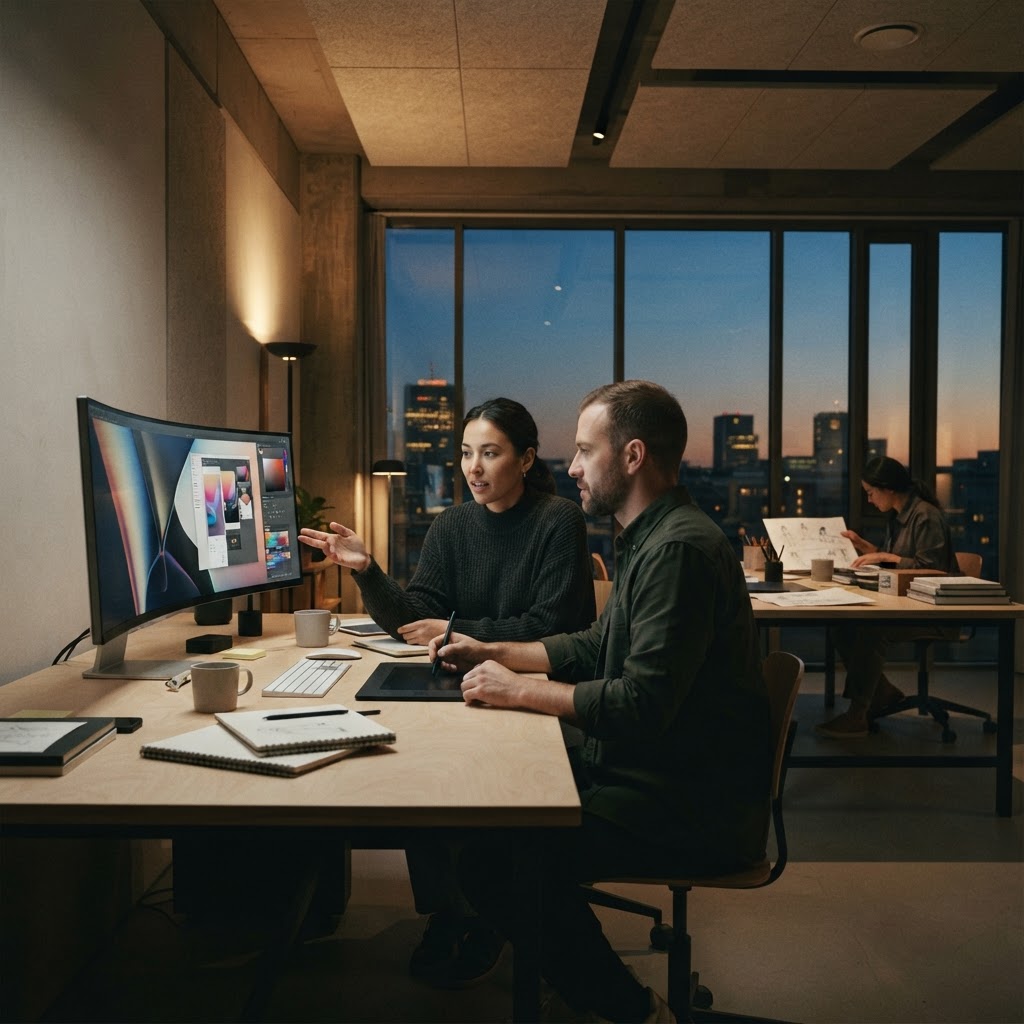
Featured image: AI-generated editorial illustration.