The Gravity of the Frame: The Psychological Weight of Composition in Visionary Storytelling
In the digital age, media has become weightless. We scroll through a pressurized vacuum of ephemeral content—images that float, flicker, and vanish before they can take root in the subconscious. For the visionary, the founder, and the change-maker, this weightlessness is a threat. When your mission is to shift the cultural landscape or disrupt an entire industry, you cannot afford for your message to drift. You need gravity. At 1976 Studios, we do not just produce content; we engineer cinematic architecture. We understand that cinematography is not merely the act of capturing light, but the science of directing the human spirit. The most potent tool in this pursuit is the gravity of the frame: the psychological weight of composition.
The Architecture of Significance: Defining Visual Weight
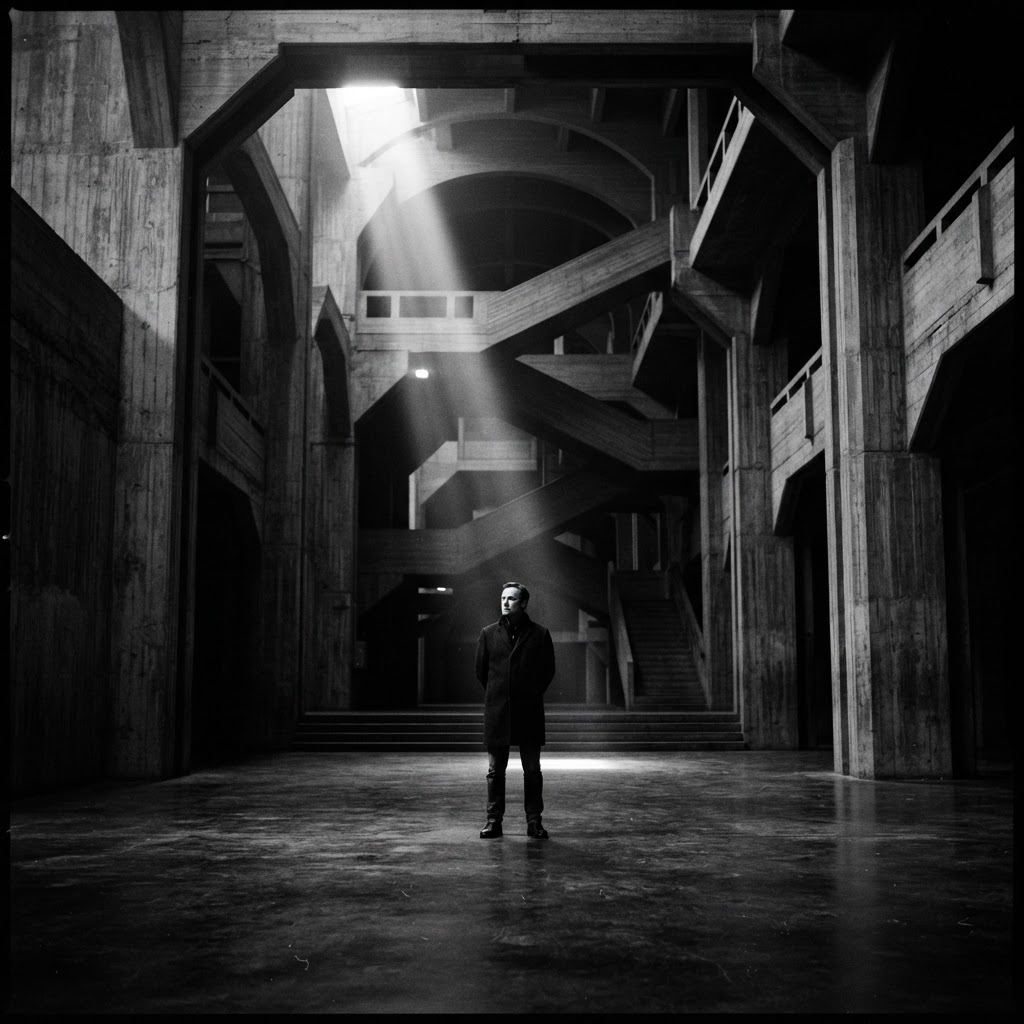
Every object, shadow, and highlight within a frame carries a specific psychological 'mass.' Just as physical objects are subject to the laws of physics, the elements within a visual narrative are subject to the laws of perception. When a frame is poorly composed, the viewer’s eye wanders, searching for a place to land. The message feels unstable, unconvincing, and ultimately, forgettable. However, through creative direction that prioritizes visual weight, we can create a sense of 'gravity' around a brand’s central mission. By strategically placing the most important elements of a story where they command the most attention, we anchor the viewer's focus. This isn't about mere aesthetics; it is about creating an undeniable reality. When we use heavy shadows to ground a subject or high-contrast lighting to pull the eye toward a specific action, we are telling the viewer: 'This matters. This has substance. This is real.'
Symmetry vs. Chaos: The Geometry of Authority and Change
In the lexicon of film production, how we balance the frame dictates how the audience perceives the power of the visionary. Center-punched framing—placing the subject directly in the middle of the shot—is a technique of immense authority. It is the visual equivalent of a manifesto. It suggests stability, unwavering focus, and a direct challenge to the status quo. For a founder building a new category or a leader establishing a legacy, symmetry provides the visual foundation of leadership. But for those whose mission is to disrupt, to agitate, or to provoke systemic change, symmetry can feel too safe. This is where 1976 Studios utilizes 'calculated chaos.' By purposefully unbalancing a frame—leaving a vast amount of 'negative space' on one side or cutting off the edge of a subject—we create a sense of tension and urgency. This visual imbalance mirrors the discomfort of progress. It signals to the viewer that the world is currently out of alignment, and that the brand they are watching is the force that will set it right.
The Subversion of the Rule: Beyond the Rule of Thirds
Standard marketing agencies rely on the 'Rule of Thirds' because it is safe, predictable, and visually pleasing. But 1976 Studios is not an agency; we are a studio. We believe that for visionary brands, 'pleasing' is often the enemy of 'impact.' To signal true industry disruption, we often choose to subvert traditional compositional rules. When we place a subject in the extreme lower corner of the frame, surrounded by an overwhelming environment, we aren't just making a pretty picture. We are telling a story of a visionary standing against the odds. When we break the frame with jarring, close-up cinematic storytelling, we are forcing the audience into an intimate, perhaps even uncomfortable, proximity with the truth. By breaking the rules of traditional composition, we signal that the brand itself is a rule-breaker. We move the conversation from transactional observation to visceral participation.
Depth as Narrative: The Bridge Between Origin and Destination
A frame is not a flat surface; it is a three-dimensional world. In our film production philosophy, the relationship between the foreground, midground, and background is a narrative timeline. We use depth to tell the story of where a visionary has come from and where they are going, simultaneously. A shallow depth of field, where the background is a soft blur, isolates the visionary in the present moment of their brilliance. Conversely, a deep focus shot, where every detail from the immediate foreground to the distant horizon is sharp, places the brand within a larger cultural or ecological ecosystem. This 'Z-axis' storytelling allows us to embed a brand's origin story in the background while keeping their future impact in sharp focus. It provides a visual weight that proves the brand doesn't exist in a vacuum, but is an integral part of a larger, evolving world.
The Ethics of the Lens: Power Dynamics in the Frame
There is a profound ethics to the lens that many content creators ignore. The focal length and camera height we choose dictate the power dynamic between the visionary and the viewer. A low-angle shot, looking up at a subject, imbues them with a sense of heroic scale and aspiration. It is the angle of a leader. A high-angle shot, looking down, can create a sense of vulnerability and humanism, which is essential for nonprofits and purpose-driven brands that need to foster deep empathy. Furthermore, the choice of a long lens versus a wide-angle lens changes the 'gravity' of the human connection. A long lens compresses space, making the visionary feel intimate and close, while a wide-angle lens expands space, showing the visionary’s place within the vastness of their mission. At 1976 Studios, these are not technical choices; they are moral ones. We ensure that the visual language matches the soul of the message.
The Studio Difference: From Floating Content to Grounded Culture
Agencies are built to optimize campaigns; they focus on the metrics of the momentary. 1976 Studios is built to create culture. Our 'Integrated Pipeline' philosophy ensures that every frame of your visual narrative is meticulously architected to carry the weight of your purpose. We don't just 'shoot video.' We build media that moves people because it is grounded in the psychological truths of human perception. When you work with us, your brand ceases to be a series of floating digital assets and becomes a gravitational force. It becomes an undeniable truth that the viewer feels in their bones. In a world of fleeting distractions, we provide the anchor. We give your vision the gravity it deserves.