The Living Media Manifesto: Why Cinematic Storytelling is the Last Frontier for Purpose-Driven Brands
In an era of disposable content, 1976 Studios explores how cinematic visual narratives and unified creative pipelines are the keys to building lasting cultural impact.
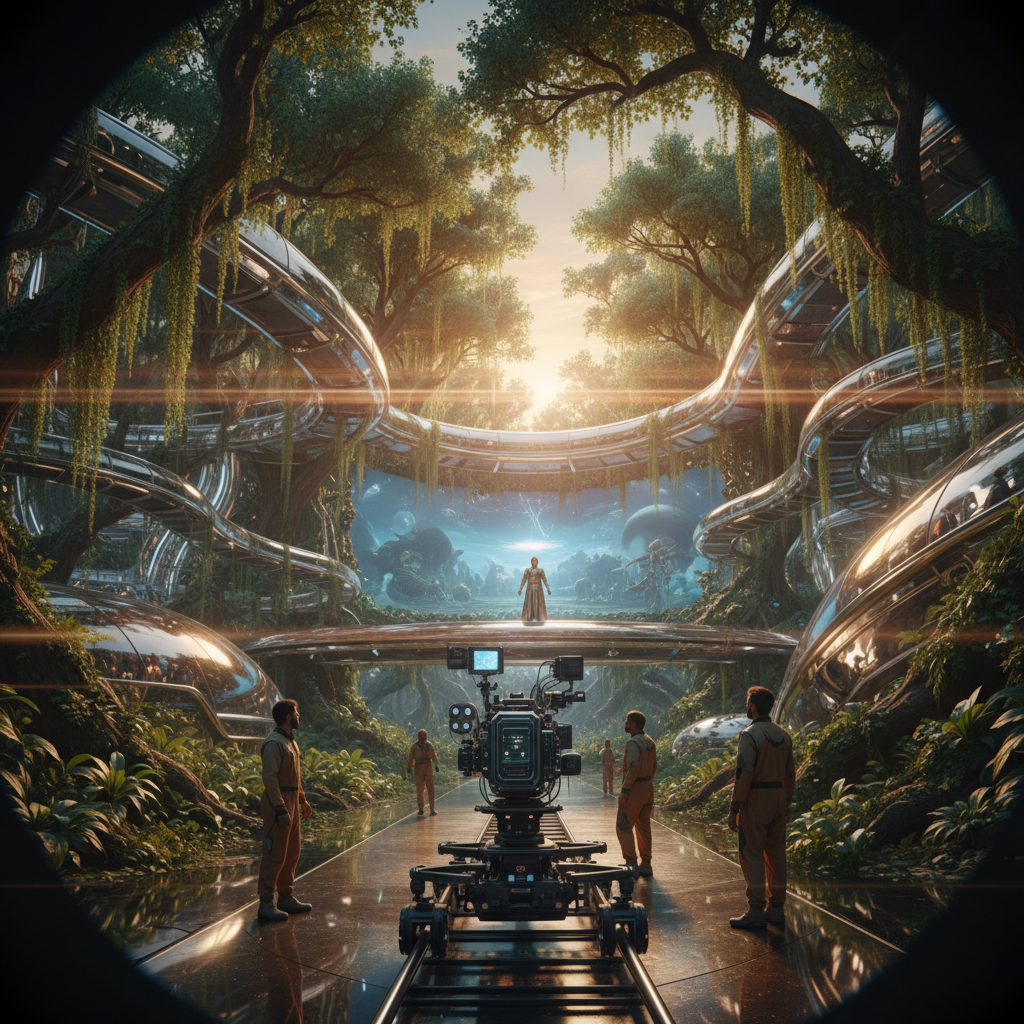
The Living Media Manifesto: Why Cinematic Storytelling is the Last Frontier for Purpose-Driven Brands
The world does not need more content. Every second, the digital void is filled with billions of pixels designed to be forgotten. We are drowning in a sea of 'optimized' campaigns, transactional marketing, and fragmented messaging that treats human attention like a commodity to be harvested rather than a soul to be moved. Agencies optimize; they tweak the knobs of a dying machine to get a 0.1% increase in a metric that doesn’t matter. 1976 Studios exists for something else entirely.
We are a Studio. And Studios create culture. For the founders, the creators, the conservationists, and the visionaries who understand that technology is changing everything, one truth remains: people remember stories. They remember the way a visual narrative made them feel. They remember meaning. This is the evolution of cinematic storytelling—the transition from disposable marketing to 'Living Media.'
The Death of the Fragmented Workflow
For too long, the creative process has been treated like an assembly line. A strategy firm hands off a brief to a creative agency, who hires a production house, who then outsources the music and post-production. At every hand-off, the heart of the vision is diluted. This fragmented workflow leads to 'emotional leakage'—a phenomenon where the raw, burning passion of a founder is cooled by the friction of too many middle-men.
At 1976 Studios, we champion the unified creative pipeline. By integrating creative direction, cinematography, and sound design under one roof, we ensure that the original spark remains white-hot. When the film production is informed by the deepest strategic roots of a brand, the result isn’t a commercial; it’s a manifesto. It’s a piece of living media that feels permanent, culturally significant, and impossible to ignore.
The Empathy Engine: Cinematic Language as Truth
Why does cinema move us in a way that a standard marketing video cannot? It is the language of empathy. Cinematic storytelling uses light, shadow, composition, and pacing to bypass the analytical mind and speak directly to the human spirit. For a nonprofit fighting for the planet or a startup disrupting an industry, this isn't just about 'looking professional.' It is about establishing deep, unshakeable trust.
Modern audiences have a heightened 'authenticity radar.' They can smell a transactional pitch from a mile away. To cut through, visionaries must embrace a marriage of high-production values and raw, human-focused documentary techniques. It is the juxtaposition of a sweeping 8k landscape and the subtle, unscripted quiver in a person’s voice. This is where cinematography becomes a tool for truth-telling, moving beyond mere aesthetics into the realm of profound connection.
The AI Revolution: The Brush, Not the Artist
The rise of AI in film production has sparked fear in many, but we see it as a liberation. The history of art is a history of tools—from the pigment-stained fingers of cave painters to the first digital sensors. AI is the modern brush. It is not here to replace the artist, but to remove the technical barriers that have historically kept high-fidelity narratives locked behind massive studio gates.
We use technology to enhance visual narratives, allowing for more complex and imaginative world-building. However, we remain vigilant against the 'uncanny valley.' Technology without a soul is just noise. The 1976 Studios philosophy ensures that while we leverage the most advanced tools available—from virtual production to AI-assisted color grading—every frame is anchored by a human pulse. We use AI to accelerate the 'how' so we can focus entirely on the 'why.'
Living Media vs. Disposable Content
We are witnessing the end of the era of the 'disposable campaign.' People are tired of things that are built to break, and they are tired of media built to be scrolled past. Purpose-driven brands require media that lives. Living Media is cinematic work that has a shelf-life measured in years, not hours. It is an immersive experience that becomes part of the brand’s DNA.
When a visionary invests in a high-caliber visual narrative, they are not just buying a video; they are creating an asset that grows in value. It becomes the standard-bearer for their mission. Whether it is a musician seeking to visualize their sonic world or a conservation organization needing to transport donors to the heart of a rainforest, the goal is the same: to create something that feels like it has always existed and will always matter.
The Counter-Industry Call to Action
The industry says 'go faster, spend less, produce more.' We say 'go deeper, think bigger, move people.' 1976 Studios is the counter-industry choice for those who refuse to be generic. We don't just record images; we build cinematic storytelling experiences that bridge the gap between where a brand is and where it belongs in the cultural consciousness.
If you are a founder who feels their current marketing is failing to capture the scale of your vision, or a creator who needs a partner to help translate your internal world into a high-fidelity reality, the era of fragmented content is over. It is time to build media that moves people.
Let us tell your story. Not as a campaign, but as a legacy.