You watch a rough cut and something feels off. The opening seems rushed, yet the middle drags. “Can we improve the pacing?” describes the problem, but gives an editor little to act on. A better note identifies what you could not follow, where the film repeated itself and which moment deserves another look.
Try the following review on one short sequence before asking for changes across the entire film. This is a practical review exercise, not a formula for producing a particular audience reaction.
Separate missing information from missing time
When a shot feels too short, ask what you needed to see. Was a name card gone before you finished reading it? Did a demonstration cut away before the important action? Or was the necessary detail absent from the shot altogether?
Those are different editing problems. More time may help a readable title. It cannot reveal a detail that was never recorded. In that case, the editor may need a different shot, a clearer explanation or an honest acknowledgement that the footage does not show the point.
Write the observation before the proposed fix: “At 00:18, I cannot see where the part connects before we cut away.” That is more useful than prescribing a slow-motion effect without knowing whether it will solve the problem.
Find the shot that repeats the previous shot
A slow section may contain several attractive images that all communicate the same thing. Imagine a workshop sequence with three wide shots of the room before anyone begins the task. Each might look good individually, while the sequence postpones the action the viewer is waiting to see.
For each shot, write a short description of what changes: location established, person introduced, tool selected, action completed. If consecutive descriptions say the same thing, ask the editor to try a version with one shot removed. Keep the original version available for comparison. Repetition can be deliberate; the exercise helps the team decide whether it is serving this sequence.
Compare two versions with one clear question
Choose a specific change to test. For example: retain the demonstration close-up a little longer while removing a repeated room shot. Keep the surrounding sequence and soundtrack consistent so the review does not become a choice between two entirely different films.
Show the versions to someone who has not been working on the edit. Ask “What happened in the demonstration?” or “Which detail was hard to follow?” Their answer is feedback from one viewer, not proof of how everyone will respond. Record disagreements instead of assuming the shorter or longer version must be better.
Make the note easy to find and resolve
Include the cut version, timestamp, observation and question. A useful note might read: “Cut 03, 00:18–00:24: I lose track of how the two pieces fit together. Could we hold the connection shot longer and remove one of the earlier wide shots?”
When the next cut arrives, return to that same passage. Check whether the connection is now understandable and whether the revised cut introduces a new interruption. Mark the note resolved or explain what remains unclear. Avoid adding a new creative direction to every review of the same issue.
Bring the rough cut and the problem
1976 Studios lists cinematic video production and music and audio production among its services. If you are planning a film or need to discuss an edit, bring the intended audience, the current cut if you have one, and two or three specific moments that need attention. That gives the conversation a concrete starting point.
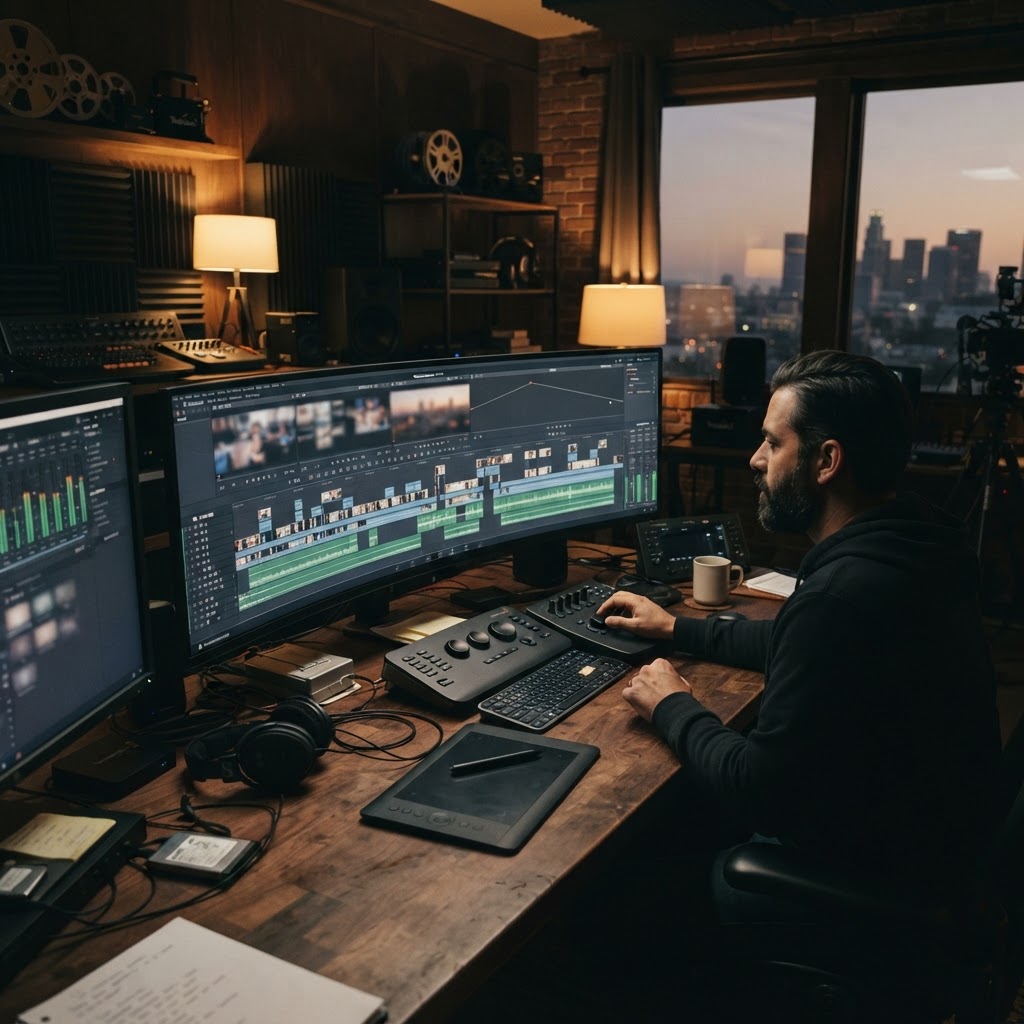
Featured image: AI-generated illustration of an editing workspace, not a photograph of the 1976 Studios team or facilities.