The Architecture of Creative Automation: Scaling Vision Without Sacrificing Soul
A creative workflow should make it easier to finish a coherent story. If a video, its music, the campaign graphics, and the landing page all move through separate tools without a shared brief, automation can multiply the inconsistency. The useful question is not how many assets a tool can produce. It is whether the next handoff preserves the intent of the project.
Start with one brief that travels with the work
Before generating variations, write down the audience, the central message, the feeling the work should create, and the action you want someone to take. Add the approved voice, visual references, and any restrictions on footage, music, or likenesses. Keep that brief available at every handoff. A new editor or tool should not have to reconstruct the purpose from filenames.
Automate a repeatable step, then inspect its output
Choose a bounded task such as creating rough visual directions, organizing a transcript, or preparing different format versions of an approved edit. Define what a usable result looks like before running it. For a transcript, that might mean checking names and technical terms. For a short video, it might mean checking the opening frame, the point where the story becomes clear, and whether the closing invitation remains legible on a phone.
Run a small sample first. If a person spends longer repairing the result than doing the task directly, narrow the task or change the instructions. Generating a larger batch will not resolve an unclear brief.
Put approval gates where mistakes become expensive
A rough concept and a public campaign need different levels of review. Before release, confirm that the story is accurate, the voice matches the brand, and the required permissions cover the actual footage, music, and other assets. Watch the final export with its sound. Read the captions. Open the destination page and follow the call to action. Review the version the audience will receive, rather than relying on an earlier preview.
Give every handoff an owner
For each stage, record who receives the work, what they need to check, and where the approved version lives. A simple sequence can work: brief, prototype, production, review, release. If the review finds a problem, return it to the person responsible for that stage with a specific correction. This keeps a failed step from silently becoming someone else's assumption.
Bring the disciplines together
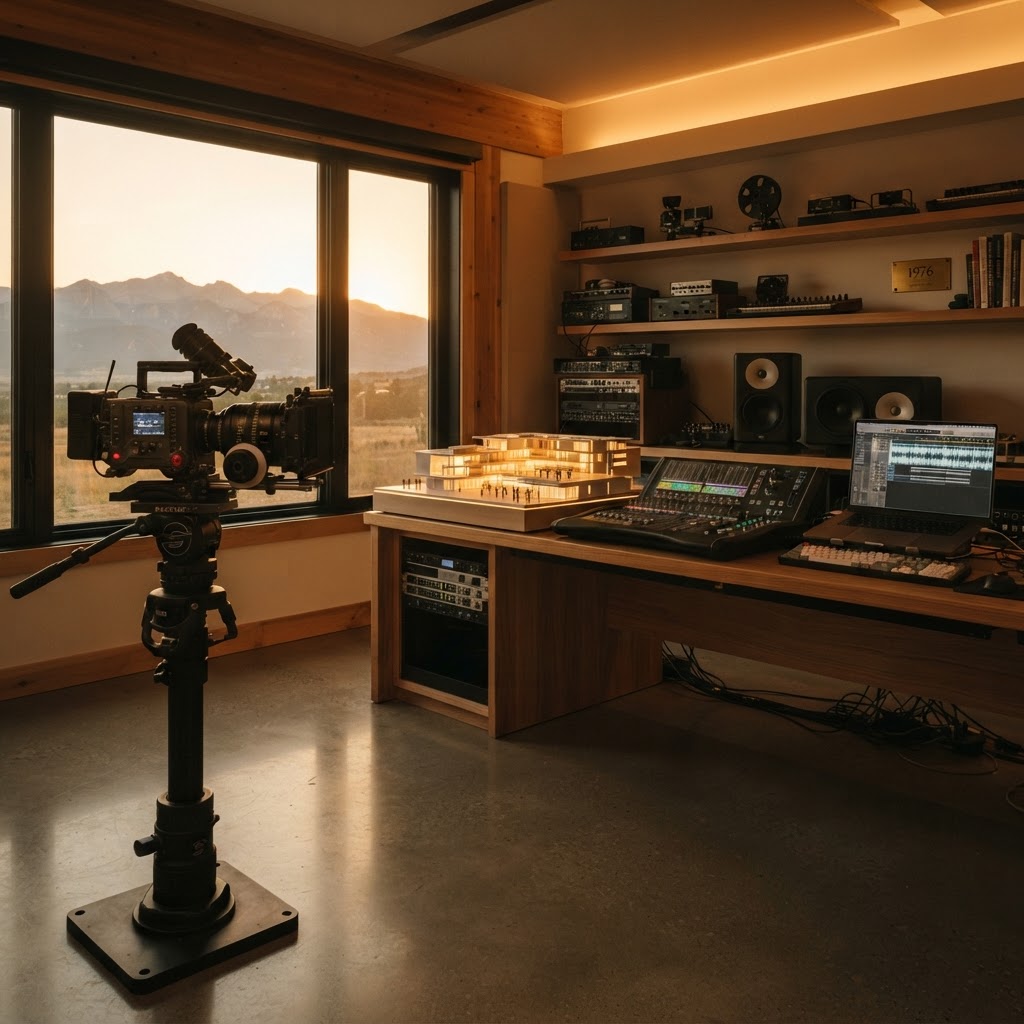
1976 Studios brings film, audio, brand development, digital experiences, and AI-assisted production into a shared creative practice. For a project that spans these disciplines, a practical starting point is to identify the story first and map the production steps around it. Automation can support those steps; creative judgment still determines what deserves to reach the audience.
Have a project that needs a clearer path from idea to release? Start Your Project and share the audience, the intended outcome, and what is currently slowing the work down.